
Media articles do move the needle in 2026, just not the way people expect.
A common take in games marketing right now is: “Press doesn’t matter anymore. Articles don’t move the needle,” whether that be wishlists or sales. If what you mean is ‘one review won’t magically produce a launch,’ sure. But the contrarian truth is that media coverage is still one of the highest-leverage inputs you can generate, because it creates measurable demand signals and conversion lift that cascade across platforms, creators, and paid spend.
Here’s the first reason this belief sticks around: teams often measure PR with the wrong yardstick. They look for an immediate, clean line from one article → purchases. In 2026, PR’s value is typically distributed: it shows up as qualified store traffic, higher conversion rates, stronger platform visibility, better creator pickup, and longer-tail search discovery.
1) You can measure press impact directly inside Steam; sometimes it’s instant, and sometimes it’s not.
Valve has made measurement easier than many teams realize. Steamworks includes Store & Steam Platform Traffic Breakdown reporting so you can see where store page visits come from—including external sources. It’s not perfect and can’t track everything, especially when users are using adblockers, VPNs, etc., but it’s reliable enough to see any impact.
The reality of game marketing is that not all games are created equal. Some games are more attractive to the press than others. This can be due to anything from genre (what’s hot right now) to theme or visual style.
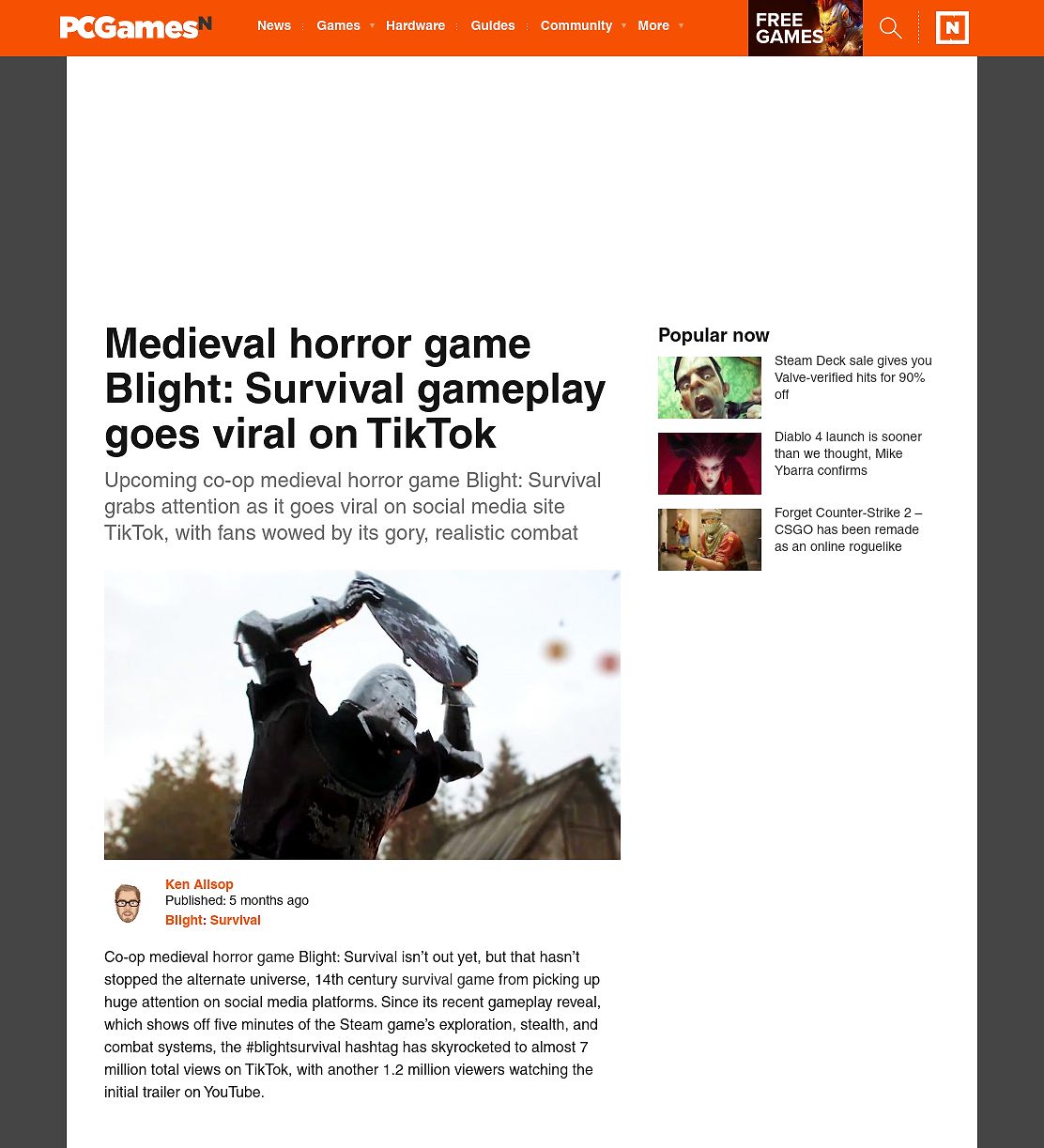
Media articles can significantly impact store traffic and wishlists during the prelaunch phase. Here you can see one of our clients for whom we did a press-only announcement for the game with no influencer outreach or other marketing activities. Articles from PC Gamer, GamingBible, and Game Rant featured catchy headlines that performed well on social media.
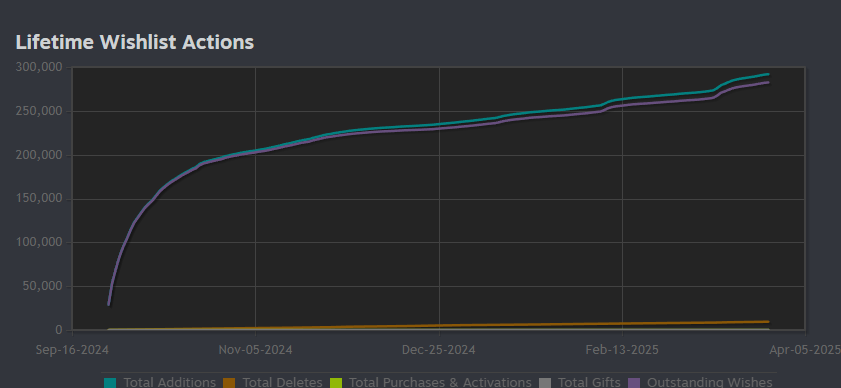
In total, 120 articles drove over 150k wishlists for the announcement, and the initial buzz created through press gained traction with influencers and social media creators shortly after, leading to an additional 150k wishlists in the following few months.
But this level of success is not always the case. Sometimes, press pick-up can be slow or require several attempts over a long period to catch the attention of the right person. Another game we helped had a significantly slower announcement period in terms of gains and only picked up a few thousand wishlists from the press.
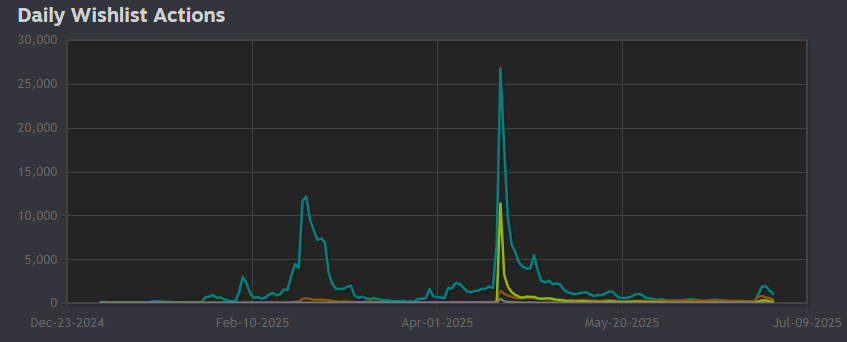
A few months after the initial January announcement, progress on the wishlist acquisition was slow. Then, through a subsequent push, we secured a few creators who jumped into the game, resulting in a significant spike in both wishlists and overall awareness. Then, circling back for an early-access launch, we returned to press with new messaging and assets, which drove solid growth around the launch and a higher wishlist-to-sales conversion in the first few days.
Of course, this doesn’t mean every game that gets press coverage converts into significant wishlists. But the common “press doesn’t move the needle” is often shorthand for “we didn’t get good coverage,” and conversion can also wobble at another point in the pipeline or be the result of the game hook not being solid enough for players.
2) The Steam algorithm is downstream of people, not magic
A second misconception is thinking PR is separate from “algorithmic visibility.” In reality, Steam is largely responding to human behavior signals (what people click, wishlist, buy, and play), and those signals are influenced by how people hear about your game.
Steam Discoverability is largely based on each logged-in user’s preferences, both from a purchase and playtime standpoint. If a person plays JRPGs regularly, they will often see other popular JRPGs in their feeds. It’s why my home store page is filled with a mix of turn-based RPGs, 4X Strategy Games, and the occasional dating sim.
This means that in a highly crowded marketplace, you can’t rely on the Steam algorithm alone to improve discoverability, because it has no data to base its decisions on. Given that popular and well-performing games are more likely to get recommended to their relevant audiences, it becomes imperative to drive external traffic to the store page.
In other words, an article can create a burst of high-intent visitors; those visitors can produce wishlists, conversions, and engagement, and that can improve how Steam treats your game over time. It’s not that press is a cheat code; it’s that press can be an ignition source for the behaviors the platform rewards. This applies to any external traffic source that drives conversions, whether it be press, influencers, ads, or social media virality.
3) Earned media increases trust and conversion in a skeptical era
2026 is noisy: AI content, recycled trailers, competition, and creator saturation. In that environment, third-party credibility matters more, not less. Edelman’s 2025 Trust Barometer reflects the scale of the trust problem (a large global sample across 28 countries), and the broader takeaway is clear: audiences are more guarded about what to believe.
Meanwhile, Nielsen’s trust research highlights the power of recommendation-style channels in driving action, particularly compared with interruptive ads. This, coupled with economic strain in which players are more conservative about pulling the purchase trigger, means more consumers are increasingly skeptical and wary about what they spend their money on.
For games, this shows up as conversion lift: a player who lands on your Steam page after reading a credible, specific write-up (“why this roguelike is different,” “best co-op demos this month,” “developers to watch”) is often more qualified and has a high intent to purchase rather than a random impression.
Additionally, media coverage supports conversion within an integrated campaign, creating additional touchpoints for consumers to see the game. A player may see a social media ad for a game that looks interesting, but doesn’t entice them enough to click. They see an article about the game, which reinforces their interest and directs them to the store page.
4) Journalists still want (and use) PR materials—if they’re good
The media landscape is brutal, but that’s not the same as ‘press is irrelevant’. With multiple outlets downsizing staff, there are fewer and fewer journalists at each site. This, coupled with the increasing number of games launched each year, results in only about 10% of games receiving coverage.
This challenge is exacerbated by AI summarization, which has decimated website traffic, leaving sites focusing on a handful of games (usually AAA) because they know these are the pieces of content that will get clicks.
Securing press attention is more competitive than ever. You are talking about potentially hundreds of pitches per journalist. This means having the best PR materials is essential. That includes careful selection of assets for press kits, ensuring pitches and press releases hook the reader instantly, and careful planning and messaging to ensure they stand out in the email stack.

So what’s the 2026 playbook?
PR is most valuable when you treat it like a demand engine, not a vanity exercise:
- Instrument everything: UTM-tag every link; compare outlets by store visits, wishlist adds, and conversion windows.
- Measure what matters (and let it change your plan): Monitor what works and what doesn’t. Figure out hurdles as they come. Was there a problem with the store page? Did the trailer get the hook across well enough? Is our audience reading this site, or are they somewhere.
- Earn media by pitching proof, not hype: Journalists are overwhelmed; what cuts through is evidence, specificity, and hard-hitting assets.
- Pitch outcomes, not adjectives: data points, player stories, design proof, and why now.
- Use coverage as a multiplier: quote pulls for ads, social proof on your Steam page, fuel for creator outreach, and a reason to re-engage with platforms.
Ultimately, media articles absolutely can move the needle in 2026. The trick is to stop expecting PR to be a single big lever, and start using it as a “coverage ladder” instead of a single big swing. Successful media campaigns take time, and PR is rarely one headline. It’s usually stacked visibility supported by multiple touchpoints across different marketing channels.